The MAYUREE NAREE Incident and Lessons in Marine Insurance: How Hull, Cargo, and P&I Coverage Differ
Last updated: 12 Mar 2026
1567 Views
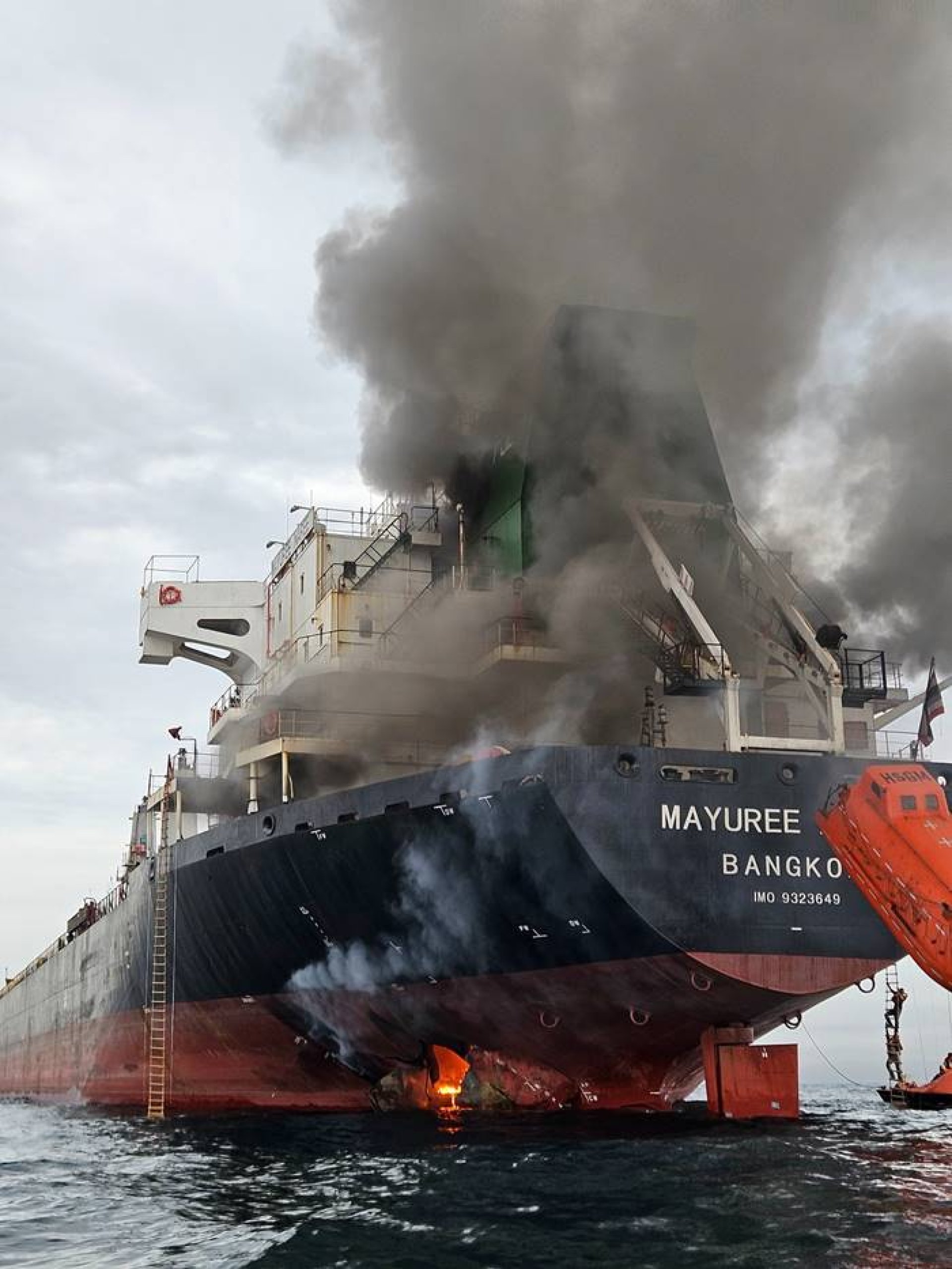
The MAYUREE NAREE Incident and Key Lessons in Marine Insurance: Are War Risks Covered, and How Do Different Types of Marine Insurance Differ?
The MAYUREE NAREE incident in the Strait of Hormuz has become an important example prompting many businesses to ask which type of marine insurance would respond to losses arising from this kind of event. This article explains the differences between Hull & Machinery insurance, Marine Cargo Insurance, and Protection & Indemnity (P&I) insurance, while also addressing whether war risks are covered and how businesses should prepare when operating through high-risk areas.
What does the MAYUREE NAREE incident mean for the shipping industry?
On 11 March 2026, Reuters reported that the Mayuree Naree was struck twice by projectiles while transiting the Strait of Hormuz, causing fire and damage in the engine room. The nature of the incident suggests not merely a machinery accident, but damage resulting from an attack in the context of armed conflict.
Thai media reports, citing the shipowner’s statement, further indicated that MAYUREE NAREE already had War Risk Insurance in place and that the vessel was in ballast, carrying no cargo at the time of the incident. As a result, the primary losses in this case relate to the vessel itself and its onboard systems rather than to any cargo damage.
A key lesson from this incident is that even if an operator already has marine insurance, that does not mean losses arising from war risks are automatically included under the main policy. In practice, this type of risk is often excluded from standard coverage and requires separate War Risks insurance or an additional extension.
What is marine insurance?
Marine insurance is designed to cover risks arising from shipping and marine transportation. In general, it can be divided into three main categories:
How do Hull, Cargo, and P&I insurance differ?
1) Hull & Machinery Insurance
Hull insurance focuses on the vessel itself, its machinery, and onboard equipment. If the vessel suffers damage from marine perils such as collision, grounding, fire, sinking, or storms, this type of insurance helps the shipowner reduce the financial burden of repairs or total loss of the principal asset. It is suitable for owners of commercial vessels, fishing vessels, tourist boats, and high-value private yachts.
In the case of MAYUREE NAREE, if the damage involves the engine room, hull structure, or essential ship systems, the most directly relevant coverage would be Hull & Machinery insurance. However, if the cause of loss arises from an attack in a wartime context, the claim would also need to be considered alongside War Risk Insurance, rather than relying only on standard hull coverage.
2) Marine Cargo Insurance
Marine Cargo Insurance covers the cargo itself while in transit, whether for imports, exports, or goods moving through the international logistics chain. If cargo is damaged, lost, or adversely affected during shipment, this insurance helps reduce the cargo owner’s financial loss.
However, in the MAYUREE NAREE case, reports indicated that the vessel was not carrying any cargo at the time of the incident. Therefore, there was effectively no marine cargo claim issue for that voyage.
3) Protection and Indemnity (P&I)
P&I insurance covers the shipowner’s or operator’s liability to third parties, such as injury or death of crew members, passengers, damage to third-party property, pollution liabilities, or wreck removal expenses. This type of insurance plays a very important role in managing legal liabilities and the practical risks of vessel operations.
If an incident like MAYUREE NAREE were to result in crew injuries, third-party liabilities, or pollution consequences, these aspects could fall under P&I. However, if the underlying cause of the loss stems from war, it must also be confirmed whether war P&I or a relevant extension had been purchased.
Are war risks covered?
The answer is that, in general, war risks are not automatically covered under every marine insurance policy, and the specific wording of each policy must be reviewed.
Does hull insurance cover war risks?
In principle, standard hull insurance usually covers marine accidents and ordinary marine perils. However, war risks are typically excluded from the main coverage, meaning shipowners must purchase War Risk Insurance or a war extension if they want protection against losses caused by war, attacks, weapons, seizure, or civil unrest in conflict areas.
Does marine cargo insurance cover war risks?
Some marine cargo policies may cover basic cargo loss or damage, but risks arising from war and strikes are often treated as additional extensions and are not always included in the base coverage. Policyholders should therefore verify clearly whether these special clauses have been purchased.
Does P&I cover war risks?
P&I normally covers the general liabilities of the shipowner. However, liabilities arising from war-related events are often not automatically included and may require separate war P&I coverage or a dedicated extension, especially where the vessel is operating in areas classified by underwriters as high risk.
Who should pay particular attention to War Risk Insurance?
War Risk Insurance is not relevant only to large shipping companies. It is important for a wide range of businesses, including:
Which insurers or brokers in Thailand are involved in this type of coverage?
Based on information published on the official websites of market participants in Thailand, both insurers and brokers offer marine insurance services, although the level of publicly available information regarding war risks varies.
Chubb Thailand
Chubb Thailand has a Marine Hull & Specialty Insurance page that clearly refers to hull & machinery, marine liability, and also mentions war as part of its coverage offering. It is therefore one of the clearest publicly visible examples of a company associated with this type of cover.
Allianz Ayudhya
Allianz Ayudhya clearly states that it offers Marine Cargo, Inland Transit, and Hull & Machinery insurance. However, based on the public pages reviewed, it does not explicitly confirm war risks coverage, so further inquiry would be advisable for businesses seeking dedicated war risks protection.
AXA Thailand
AXA Thailand provides clear information on Marine Cargo Insurance and Freight Forwarder Liability, more so than on war hull coverage for commercial vessels. As such, where the risk scenario involves a vessel being attacked in a conflict zone, direct clarification with the company would be prudent.
Brokers such as R.M. Consultant, Howden Thailand, Lockton Wattana, Marsh Thailand, and Aon Thailand
These brokers play an important role in arranging coverage across multiple insurance markets, both domestic and international. They are particularly suitable for more complex cases, such as vessels trading in high-risk areas or placements requiring international markets, P&I, or dedicated War Risks coverage.
What should businesses ask before purchasing marine insurance?
To ensure that coverage matches the actual risk exposure, businesses should clarify the following points with their insurer or broker:
1) What exactly is covered?
It is important to distinguish whether the policy covers the vessel, cargo, or liability exposure.
2) Are war risks included?
Do not assume they are included. Ask clearly whether war cover is built into the policy or must be purchased separately.
3) Which routes or trading areas are covered?
Certain areas such as Hormuz, the Red Sea, or other designated listed areas may be subject to special terms or additional premium.
4) Is coverage annual or voyage-based?
In some cases, war cover is written on an annual basis, while in others it is charged as an additional voyage premium.
5) Are there deductibles or sub-limits?
Even where cover applies, there may still be deductibles or sub-limits that should be reviewed in advance.
Conclusion: Why is the MAYUREE NAREE case important?
The MAYUREE NAREE case clearly shows that marine insurance is no longer a distant or purely technical matter for the shipping and logistics sector. Losses arising from geopolitical events can occur in reality and may fall outside the scope of standard marine policies if War Risk Insurance has not been arranged in advance.
Accordingly, whether one is a shipowner, exporter, importer, or logistics operator, understanding the differences between Hull & Machinery insurance, Marine Cargo Insurance, and P&I, as well as checking whether war risks are covered, is essential for protecting the business against potentially very significant losses in the future.
The MAYUREE NAREE incident in the Strait of Hormuz has become an important example prompting many businesses to ask which type of marine insurance would respond to losses arising from this kind of event. This article explains the differences between Hull & Machinery insurance, Marine Cargo Insurance, and Protection & Indemnity (P&I) insurance, while also addressing whether war risks are covered and how businesses should prepare when operating through high-risk areas.
What does the MAYUREE NAREE incident mean for the shipping industry?
On 11 March 2026, Reuters reported that the Mayuree Naree was struck twice by projectiles while transiting the Strait of Hormuz, causing fire and damage in the engine room. The nature of the incident suggests not merely a machinery accident, but damage resulting from an attack in the context of armed conflict.
Thai media reports, citing the shipowner’s statement, further indicated that MAYUREE NAREE already had War Risk Insurance in place and that the vessel was in ballast, carrying no cargo at the time of the incident. As a result, the primary losses in this case relate to the vessel itself and its onboard systems rather than to any cargo damage.
A key lesson from this incident is that even if an operator already has marine insurance, that does not mean losses arising from war risks are automatically included under the main policy. In practice, this type of risk is often excluded from standard coverage and requires separate War Risks insurance or an additional extension.
What is marine insurance?
Marine insurance is designed to cover risks arising from shipping and marine transportation. In general, it can be divided into three main categories:
- Hull & Machinery Insurance
- Marine Cargo Insurance
- Protection and Indemnity (P&I) Insurance
How do Hull, Cargo, and P&I insurance differ?
1) Hull & Machinery Insurance
Hull insurance focuses on the vessel itself, its machinery, and onboard equipment. If the vessel suffers damage from marine perils such as collision, grounding, fire, sinking, or storms, this type of insurance helps the shipowner reduce the financial burden of repairs or total loss of the principal asset. It is suitable for owners of commercial vessels, fishing vessels, tourist boats, and high-value private yachts.
In the case of MAYUREE NAREE, if the damage involves the engine room, hull structure, or essential ship systems, the most directly relevant coverage would be Hull & Machinery insurance. However, if the cause of loss arises from an attack in a wartime context, the claim would also need to be considered alongside War Risk Insurance, rather than relying only on standard hull coverage.
2) Marine Cargo Insurance
Marine Cargo Insurance covers the cargo itself while in transit, whether for imports, exports, or goods moving through the international logistics chain. If cargo is damaged, lost, or adversely affected during shipment, this insurance helps reduce the cargo owner’s financial loss.
However, in the MAYUREE NAREE case, reports indicated that the vessel was not carrying any cargo at the time of the incident. Therefore, there was effectively no marine cargo claim issue for that voyage.
3) Protection and Indemnity (P&I)
P&I insurance covers the shipowner’s or operator’s liability to third parties, such as injury or death of crew members, passengers, damage to third-party property, pollution liabilities, or wreck removal expenses. This type of insurance plays a very important role in managing legal liabilities and the practical risks of vessel operations.
If an incident like MAYUREE NAREE were to result in crew injuries, third-party liabilities, or pollution consequences, these aspects could fall under P&I. However, if the underlying cause of the loss stems from war, it must also be confirmed whether war P&I or a relevant extension had been purchased.
Are war risks covered?
The answer is that, in general, war risks are not automatically covered under every marine insurance policy, and the specific wording of each policy must be reviewed.
Does hull insurance cover war risks?
In principle, standard hull insurance usually covers marine accidents and ordinary marine perils. However, war risks are typically excluded from the main coverage, meaning shipowners must purchase War Risk Insurance or a war extension if they want protection against losses caused by war, attacks, weapons, seizure, or civil unrest in conflict areas.
Does marine cargo insurance cover war risks?
Some marine cargo policies may cover basic cargo loss or damage, but risks arising from war and strikes are often treated as additional extensions and are not always included in the base coverage. Policyholders should therefore verify clearly whether these special clauses have been purchased.
Does P&I cover war risks?
P&I normally covers the general liabilities of the shipowner. However, liabilities arising from war-related events are often not automatically included and may require separate war P&I coverage or a dedicated extension, especially where the vessel is operating in areas classified by underwriters as high risk.
Who should pay particular attention to War Risk Insurance?
War Risk Insurance is not relevant only to large shipping companies. It is important for a wide range of businesses, including:
- Owners of commercial vessels engaged in international trading
- Operators whose vessels pass through high-risk areas such as the Strait of Hormuz or the Red Sea
- Exporters and importers handling high-value cargo
- Logistics businesses and international transport service providers
- Charterers or parties with financial exposure to the vessel
Which insurers or brokers in Thailand are involved in this type of coverage?
Based on information published on the official websites of market participants in Thailand, both insurers and brokers offer marine insurance services, although the level of publicly available information regarding war risks varies.
Chubb Thailand
Chubb Thailand has a Marine Hull & Specialty Insurance page that clearly refers to hull & machinery, marine liability, and also mentions war as part of its coverage offering. It is therefore one of the clearest publicly visible examples of a company associated with this type of cover.
Allianz Ayudhya
Allianz Ayudhya clearly states that it offers Marine Cargo, Inland Transit, and Hull & Machinery insurance. However, based on the public pages reviewed, it does not explicitly confirm war risks coverage, so further inquiry would be advisable for businesses seeking dedicated war risks protection.
AXA Thailand
AXA Thailand provides clear information on Marine Cargo Insurance and Freight Forwarder Liability, more so than on war hull coverage for commercial vessels. As such, where the risk scenario involves a vessel being attacked in a conflict zone, direct clarification with the company would be prudent.
Brokers such as R.M. Consultant, Howden Thailand, Lockton Wattana, Marsh Thailand, and Aon Thailand
These brokers play an important role in arranging coverage across multiple insurance markets, both domestic and international. They are particularly suitable for more complex cases, such as vessels trading in high-risk areas or placements requiring international markets, P&I, or dedicated War Risks coverage.
What should businesses ask before purchasing marine insurance?
To ensure that coverage matches the actual risk exposure, businesses should clarify the following points with their insurer or broker:
1) What exactly is covered?
It is important to distinguish whether the policy covers the vessel, cargo, or liability exposure.
2) Are war risks included?
Do not assume they are included. Ask clearly whether war cover is built into the policy or must be purchased separately.
3) Which routes or trading areas are covered?
Certain areas such as Hormuz, the Red Sea, or other designated listed areas may be subject to special terms or additional premium.
4) Is coverage annual or voyage-based?
In some cases, war cover is written on an annual basis, while in others it is charged as an additional voyage premium.
5) Are there deductibles or sub-limits?
Even where cover applies, there may still be deductibles or sub-limits that should be reviewed in advance.
Conclusion: Why is the MAYUREE NAREE case important?
The MAYUREE NAREE case clearly shows that marine insurance is no longer a distant or purely technical matter for the shipping and logistics sector. Losses arising from geopolitical events can occur in reality and may fall outside the scope of standard marine policies if War Risk Insurance has not been arranged in advance.
Accordingly, whether one is a shipowner, exporter, importer, or logistics operator, understanding the differences between Hull & Machinery insurance, Marine Cargo Insurance, and P&I, as well as checking whether war risks are covered, is essential for protecting the business against potentially very significant losses in the future.
Related Content

Office workers often face health issues caused by long hours spent in repetitive, sedentary environments. Common issues include:
3 Apr 2025

Personal health insurance and comprehensive health insurance both aim to protect your health, but they differ significantly in coverage and terms. Here’s a breakdown of the differences:
3 Apr 2025

Learn about Nipah virus, a rare but serious zoonotic disease linked to fruit bats. Discover its symptoms, how it spreads, key risk factors, and simple prevention tips to protect yourself and your community.
15 May 2026
